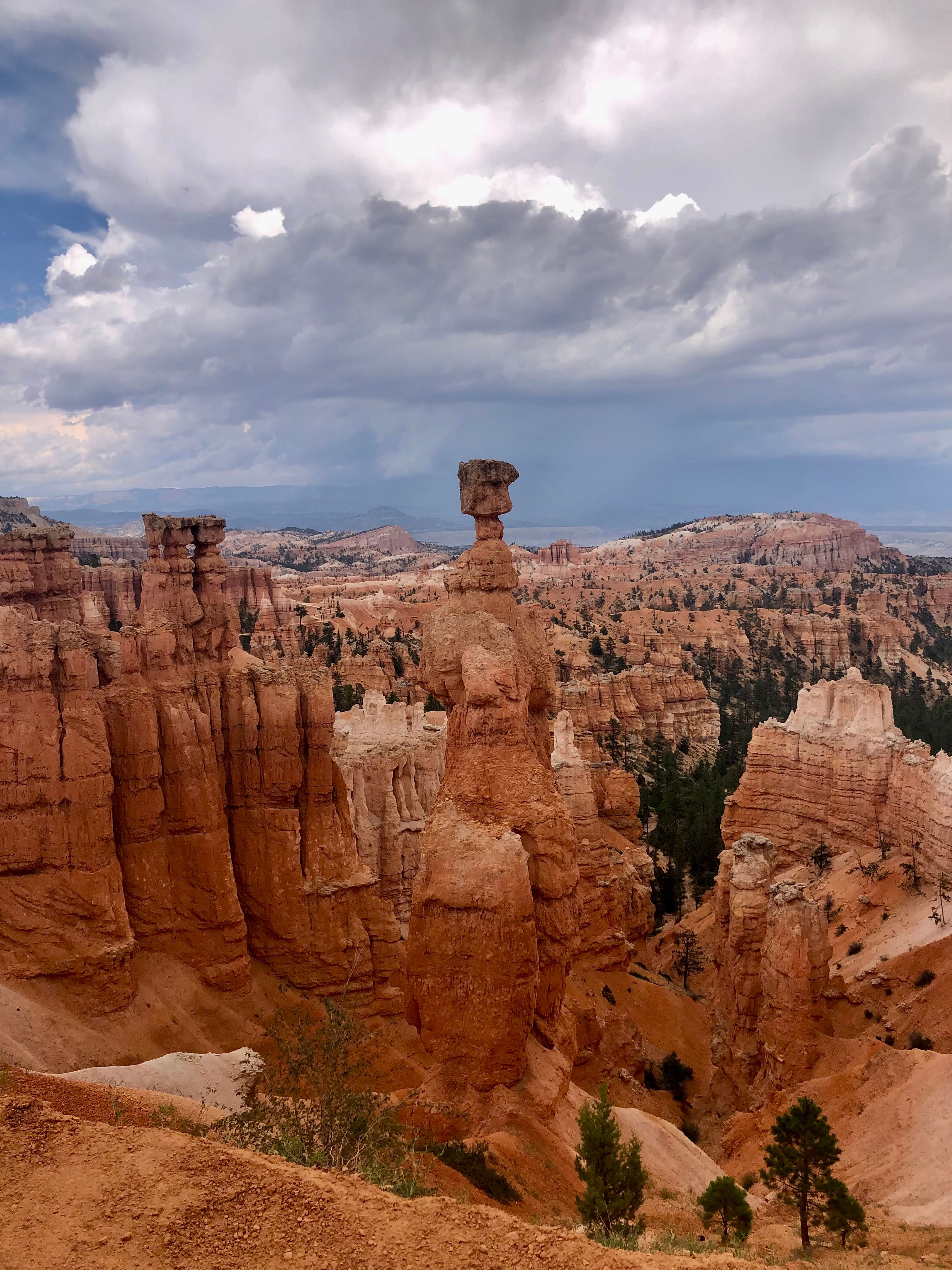
Bryce Canyon has a way of making weather feel like part of the show. One minute the sky is blue, the hoodoos are glowing, and you are congratulating yourself for planning the perfect Southern Utah day. The next minute, clouds are stacking up, thunder is muttering somewhere behind the ridge, and the desert is reminding everyone that it is very much in charge.
Most Bryce Canyon visits are safe, beautiful, and full of the kind of views that make your camera work overtime. But this is still high-elevation canyon country, and that means travelers need to take fast-changing weather seriously. Especially during monsoon season, when afternoon thunderstorms can turn dry washes, trails, and low canyon areas into dangerous places very quickly.
So let’s talk about flash floods, storm safety, and how to enjoy Bryce Canyon without treating the forecast like a decorative suggestion.
Why Flash Floods Happen So Fast Here
Southern Utah is famous for dry desert landscapes, which makes flash flooding sound almost impossible at first. But that dry ground is exactly part of the problem. When heavy rain falls quickly, especially over slickrock, steep slopes, or already-dry soil, the water does not politely soak in and disappear. It runs.
And when it runs into washes, gullies, slot canyons, trail corridors, and low points, it can rise fast. Very fast. The scary part is that the storm does not always have to be directly overhead. Rain falling miles away can drain into the canyon system and send water rushing downstream before you have had time to finish your snack, check your map, or say, “Wait, is that thunder?”
Bryce Canyon is not a place to panic about weather. It is a place to respect it. Big difference.
Know the Season You Are Visiting
Flash flood risk can increase during late summer monsoon patterns, especially in July, August, and September. That is also when Bryce Canyon can see quick-building afternoon storms, lightning, heavy rain, and trail conditions that change in a hurry.
That does not mean you should avoid Bryce Canyon in late summer. Honestly, it can be gorgeous. The colors pop, the skies are dramatic, and the whole landscape looks like it is auditioning for a nature documentary. But it does mean you should build your day around the weather instead of pretending weather is something that happens to other people.
Start hikes early. Keep an eye on the sky. Check the National Weather Service forecast and Bryce Canyon National Park alerts before heading out. If storms are in the forecast, stay out of narrow drainages, low canyon sections, and any area where water could funnel quickly.
The hoodoos will still be there tomorrow. Your ankles, phone, backpack, and general well-being would all love to be there too.
Warning Signs You Should Not Ignore
Flash floods do not always arrive with a dramatic movie soundtrack, but they do have warning signs. If you notice sudden changes in weather, dark clouds building, thunder, stronger winds, or rain starting to fall, take it seriously.
If you are near a wash, creek bed, or canyon bottom, pay attention to the water. Rising water, muddy water, floating debris, or a sudden roaring sound are all signs that it is time to move to higher ground immediately. Not after one more photo. Not after finishing the trail. Immediately.
And lightning deserves its own little lecture because Bryce Canyon’s rim is high, exposed, and absolutely not where you want to be during a storm. If you hear thunder, head to a real building or a hard-topped vehicle. Trees, overlooks, open shelters, and exposed viewpoints are not safe places to wait it out.
Yes, leaving a viewpoint early is annoying. Being the tallest object on a canyon rim is more annoying.
What to Pack for Storm-Smart Exploring
You do not need to pack like you are launching an expedition to another planet, but you should bring enough gear to handle a change in conditions.
Bring water, salty snacks, a map, layers, a rain jacket, sun protection, and hiking shoes with good traction. Bryce Canyon sits at high elevation, so temperatures can swing quickly, especially when clouds roll in or rain cools the air. Wet clothes plus wind can make you cold faster than expected, even in summer.
A portable phone charger is also smart, but do not make your phone your entire safety plan. Service can be spotty, batteries die, and phones have a special talent for becoming useless right when you most want them to be heroic. Download maps ahead of time, tell someone where you are going, and know your route before you start.
Also, if a trail is closed, respect the closure. It is not a challenge. It is not a suggestion. It is the park saying, “Maybe let’s not make search and rescue part of your vacation itinerary.”
What to Do if a Storm Moves In
If the sky starts looking questionable, shift plans early. Head back toward the rim, visitor center, shuttle stops, your vehicle, or another safe location before the storm is on top of you.
If you are caught near rising water, move to higher ground as quickly and safely as possible. Do not try to cross moving water. Even shallow water can knock a person down, and deeper moving water can become dangerous fast. Avoid bridges, narrow crossings, and places where debris could pile up.
If someone is injured or trapped, call 911 as soon as you can and give the most accurate location possible. Stay calm, conserve energy, and avoid making the situation worse by entering floodwater after someone else.
That last part is hard, but important. Rescue situations get more dangerous when one emergency becomes two.
Build a Flexible Bryce Canyon Day
The best Bryce Canyon travelers have a Plan A, a Plan B, and a “the sky looks weird, let’s go get lunch” plan.
If storms threaten your hiking plans, you still have options. Visit the Bryce Canyon Visitor Center, enjoy a ranger program if conditions allow, take a scenic drive when roads are safe, or wait for the weather to pass from somewhere sheltered. Sometimes the best move is simply giving the park an hour to sort itself out.
And when the skies are clear again, the post-storm views can be incredible. Fresh air, dramatic clouds, glowing rock, and that clean desert smell that makes you feel like the whole canyon just got rinsed and polished.
See the Landscape Safely from Above
A helicopter tour can be an unforgettable way to understand Bryce Canyon’s scale without spending your whole day below the rim. From above, you can see how the amphitheaters, ridges, forests, washes, and surrounding plateaus connect. It is the kind of perspective that makes the landscape click into place.
Of course, flight safety always comes first. Weather can affect flight routes, timing, and availability, and that is exactly how it should be. If conditions are not right, we wait. The view is not worth arguing with a thunderstorm.
But on a clear, safe day? Seeing Bryce Canyon from the air is pure magic. The kind you will talk about long after your hiking shoes have finally stopped carrying red dust.
The Bottom Line
Bryce Canyon is wild, beautiful, and full of surprises. Most of those surprises are wonderful. Some require preparation.
Check the forecast. Start early. Watch the sky. Avoid low canyon areas when storms are possible. Bring the right gear. Respect closures. And remember that changing plans is not losing the day. Sometimes it is the smartest move you make all trip.
The canyon has been shaped by weather for millions of years. You are just visiting for the weekend. Let Bryce Canyon be dramatic, gorgeous, and occasionally moody. Just make sure you are ready when it is.